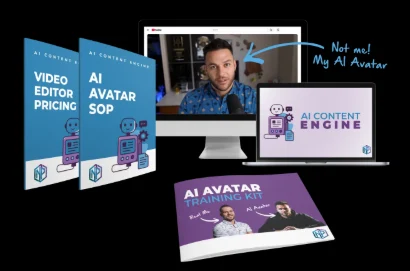
Nick Ponte – AI Content Engine
$97.00 Original price was: $97.00.$20.00Current price is: $20.00.
- 24/7 Contact Support & Telegram - Ecomkevin_1
- You Can Request Any Courses
- Original Courses HD Qualite and links updated
Guaranteed Safe Checkout


Description
Nick Ponte – AI Content Engine: Course Overview, Benefits, and Review
Introduction
Creating content consistently can be challenging, especially when you manage a business, promote products, or build an online presence. Writing articles, preparing social media posts, developing marketing messages, and maintaining a regular publishing schedule all require time and effort. As a result, many creators and entrepreneurs are exploring artificial intelligence to make their content workflows more efficient.
Nick Ponte – AI Content Engine is a course title that suggests a focus on AI-assisted content creation and the processes used to produce digital content. For anyone researching AI content creation training, this program may be worth exploring to understand whether its approach aligns with their goals.
Artificial intelligence has changed how people approach writing and digital marketing. However, using AI effectively requires more than entering a few prompts. You also need a clear content strategy, an understanding of your audience, and a process for reviewing and improving the results.
This overview explores the potential value of AI content training, the skills learners may want to develop, and the factors to consider before choosing a program. Because detailed, independently verified information about the course curriculum is not available here, specific modules, bonuses, instructor credentials, and promised outcomes are not assumed.
What Is Nick Ponte – AI Content Engine?
Nick Ponte – AI Content Engine is a course or training product that prospective buyers may be researching in connection with AI-powered content production. The title indicates an association with artificial intelligence and content creation. However, the exact curriculum and included resources should be confirmed through the official course information before purchasing.
In general, AI content training helps learners understand how to incorporate AI tools into their writing and marketing processes. These workflows can support activities such as brainstorming ideas, outlining articles, drafting social media content, and refining written material.
Moreover, a structured approach can help users move beyond random experimentation. Instead of starting from scratch every time, they can develop repeatable processes that support consistent publishing.
The value of any AI content program depends on its actual teaching materials, practical exercises, and relevance to the learner’s needs. Therefore, prospective students should evaluate the available course details carefully before deciding whether it is the right fit.
Understanding AI-Powered Content Creation
AI content creation involves using artificial intelligence tools to assist with planning, drafting, editing, and organizing digital content. These tools can help reduce repetitive work. Nevertheless, they work best when guided by clear instructions and human judgment.
For example, a business owner might use AI to brainstorm blog topics, organize research notes, or create an initial outline. Afterward, the owner can add personal experience, verify important facts, and edit the draft to reflect the brand’s voice.
Similarly, a content creator may use AI to explore different approaches to a social media post. The tool can suggest several opening lines or organize ideas into a more readable format. The creator then chooses the strongest version and adjusts it for the intended audience.
An effective workflow combines speed with quality. Consequently, learners should understand both the capabilities and limitations of AI-generated material.
What Can Learners Expect to Learn?
The exact lessons included in Nick Ponte – AI Content Engine should be checked against the current official course description. However, the following areas are relevant to people exploring AI content creation training.
1. Understanding AI Content Tools
A useful starting point is learning what AI writing tools can and cannot do. Different tools may support brainstorming, summarization, outlining, editing, and other writing-related tasks.
Understanding these functions helps users select suitable tools for specific needs. Furthermore, it reduces the temptation to use one tool for every part of the content process.
Learners can benefit from knowing when AI assistance is appropriate and when original research or human expertise is necessary.
2. Developing Better Prompts
Prompt writing is an important skill in AI-assisted content production. A prompt explains the task, audience, purpose, tone, and expected format.
For instance, asking an AI tool to write a blog post provides little direction. In contrast, specifying the intended reader, central topic, desired structure, and writing style gives the tool more useful context.
As users refine their instructions, they can evaluate which approaches produce more relevant drafts. Over time, this process can make AI interactions more consistent.
3. Planning Content Strategically
Publishing useful content requires more than producing a high volume of text. Creators also need to understand their audience, choose relevant topics, and connect each piece of content to a clear purpose.
A content strategy can include educational articles, product explanations, social media updates, and answers to common customer questions.
Additionally, organizing topics into a publishing calendar helps prevent inconsistent posting. It also makes it easier to identify gaps in existing content and prioritize upcoming work.
4. Creating and Improving Written Content
AI tools can assist with early drafts, outlines, introductions, summaries, and alternative headlines. However, the first draft should rarely be treated as the finished product.
Writers should review the output for accuracy, clarity, repetition, tone, and usefulness. They should also remove generic statements and add details that reflect their own knowledge.
As a result, the final content becomes more relevant to readers. Human editing also helps ensure that the material represents the business accurately.
5. Building Repeatable Content Workflows
A repeatable workflow gives content creators a clear process to follow. It might begin with selecting a topic and gathering reliable information. Next, the creator develops an outline, prepares a draft, edits the material, and publishes the final version.
AI can support several stages of this process. Nevertheless, human oversight remains essential, particularly when content includes product specifications, professional advice, statistics, or factual claims.
Once a workflow is established, creators can identify time-consuming tasks and improve them gradually.
6. Maintaining Quality and Originality
Producing more content is not automatically the same as producing better content. Readers need accurate information, clear explanations, and practical answers.
Therefore, creators should check factual claims and avoid publishing material that repeats common information without adding value. They should also ensure that the content reflects their brand’s identity.
Original examples, relevant experience, and careful editing can make a significant difference. Ultimately, AI should support the creative process rather than replace thoughtful communication.
Who Is This Course Suitable For?
People considering Nick Ponte – AI Content Engine may include several types of learners. Suitability will depend on the program’s verified curriculum and the learner’s experience.
Digital marketers: Marketers exploring AI writing tools may want to improve their content planning and drafting processes.
Bloggers and website owners: Publishers who regularly create articles may be interested in methods for organizing ideas and managing writing tasks.
Entrepreneurs and small business owners: Business owners often handle multiple responsibilities. AI-assisted workflows may help them approach content production more systematically.
Freelance writers and content creators: Freelancers may want to explore new ways to brainstorm, outline, and refine their work while maintaining editorial standards.
E-commerce professionals: Online store owners may use AI to support product descriptions, category introductions, customer education, and other written materials. All product information should still be checked before publication.
Beginners interested in AI: People who are new to AI writing may benefit from learning the fundamentals before developing more advanced workflows.
However, anyone expecting guaranteed income, instant business growth, or completely automated content production should approach such expectations cautiously. Results depend on the learner’s skills, implementation, market, and working practices.
Key Benefits of Learning AI Content Creation
More Organized Content Production
A defined workflow can help creators move from an initial idea to a completed draft with fewer unnecessary steps. In addition, a consistent process makes it easier to plan future projects.
Support for Idea Generation
Coming up with new topics can become difficult when publishing regularly. AI tools can help generate starting points, alternative angles, and questions that deserve further exploration.
Nevertheless, ideas should be selected according to audience needs rather than novelty alone.
Greater Flexibility
AI-assisted content methods can be applied to many writing tasks. Depending on the tools and workflow, these may include blog outlines, email drafts, social media captions, and educational content.
This flexibility can be useful for people who manage several communication channels.
Improved Drafting Efficiency
AI can help create an initial structure or suggest alternative wording. Consequently, writers may spend less time facing a blank page and more time refining the message.
The actual time saved will vary with the task and the amount of editing required.
Better Understanding of AI Limitations
Responsible AI use involves recognizing that generated content can contain errors, unsupported statements, and repetitive language. Learning to identify these problems is just as important as learning to generate text.
With careful review, users can make more informed decisions about when to rely on AI assistance.
A Foundation for Continued Skill Development
AI tools continue to evolve. Therefore, understanding the underlying principles of prompting, editing, content strategy, and quality control can be more valuable than depending on a single tool or temporary technique.
These skills can help learners adapt as their content requirements change.
How to Evaluate Nick Ponte – AI Content Engine Before Buying
Before purchasing any AI content creation program, review the available product information. This step helps you determine whether the training matches your expectations.
First, examine the official curriculum. Look for clear explanations of the subjects covered and the practical skills the program aims to teach.
Next, check whether the material suits your experience level. Beginners may need foundational explanations, while experienced marketers may prefer advanced workflows and practical demonstrations.
You should also review the delivery format, access arrangements, included resources, support options, and refund terms where applicable. Confirm these details directly rather than relying on assumptions or third-party descriptions.
Furthermore, consider whether the training addresses the content tasks you perform most often. A program focused on general writing may not meet every specialized marketing need.
Finally, compare the course with your budget, available time, and existing knowledge. A well-matched learning resource should address a genuine skills gap rather than simply promise faster results.
Tips for Getting More Value From AI Content Training
If you decide to study AI content creation, use what you learn in practical projects.
Start with one clear objective, such as improving your blog workflow or creating more useful educational posts. This approach makes it easier to measure progress.
Then, practice with real tasks. Prepare an outline, generate an initial draft, and edit it carefully. Compare the final result with your usual process to identify what improved and what still needs attention.
In addition, save effective prompts and document your editing process. Over time, these records can help you build a reusable workflow.
Make fact-checking a standard step. AI-generated material should not be published without appropriate review, especially when it contains claims about products, businesses, health, finance, or other important subjects.
Most importantly, prioritize reader value. Clear explanations, relevant examples, accurate information, and a natural tone matter more than producing large amounts of generic content.
Frequently Asked Questions
What is Nick Ponte – AI Content Engine?
Nick Ponte – AI Content Engine is a course title associated with AI content creation. The exact curriculum, teaching format, and included resources should be confirmed through the current official product information.
What does an AI content creation course generally teach?
AI content training may cover prompt writing, content planning, drafting, editing, and the use of AI tools in publishing workflows. The topics included vary by program, so the actual syllabus should be reviewed before purchase.
Is Nick Ponte – AI Content Engine suitable for beginners?
It may interest beginners exploring AI-assisted writing. However, suitability depends on the course’s actual difficulty level, prerequisites, and teaching approach. Check the official description to confirm whether foundational instruction is provided.
Can AI help with blog posts and social media content?
Yes. AI tools can assist with brainstorming, outlining, drafting, and refining blog posts or social media content. Human review remains important to ensure accuracy, originality, relevance, and an appropriate brand voice.
Can AI content tools replace human writers?
AI can support many writing tasks, but it does not eliminate the need for human judgment. Writers remain responsible for factual accuracy, context, originality, editorial quality, and the usefulness of the finished content.
Does the course guarantee business growth or income?
No business or income outcome should be assumed without reliable evidence and clearly defined terms. AI training may help users develop relevant skills, but results depend on implementation, experience, market conditions, and other factors.
How can I verify what the course includes?
Review the official sales page and current product terms. Confirm the syllabus, access period, delivery format, support arrangements, pricing, and any advertised extras before completing a purchase.
Is AI-generated content ready to publish immediately?
Not necessarily. AI-generated drafts may contain inaccuracies, repetitive passages, or unsupported claims. Editing, fact-checking, and quality review should be part of the publishing process.
Final Verdict
Nick Ponte – AI Content Engine may be relevant to people exploring AI-assisted content creation and more organized writing workflows. The broader subject is useful for bloggers, entrepreneurs, digital marketers, and content professionals who want to understand how AI can support their daily work.
However, the course’s specific value depends on its verified curriculum, practical instruction, and relevance to your goals. Before purchasing, review the official product details and make sure the included training meets your expectations.
AI can make parts of content production easier, but effective results still require planning, original thinking, and careful editing. For learners willing to combine AI tools with sound content practices, developing these skills can be a worthwhile step toward a more consistent and efficient publishing process.
Reviews
There are no reviews yet.