BowTiedSalesGuy – Low Effort Selling
$599.00 Original price was: $599.00.$40.00Current price is: $40.00.
- 24/7 Contact Support & Telegram - Ecomkevin_1
- You Can Request Any Courses
- Original Courses HD Qualite and links updated
Guaranteed Safe Checkout


Description
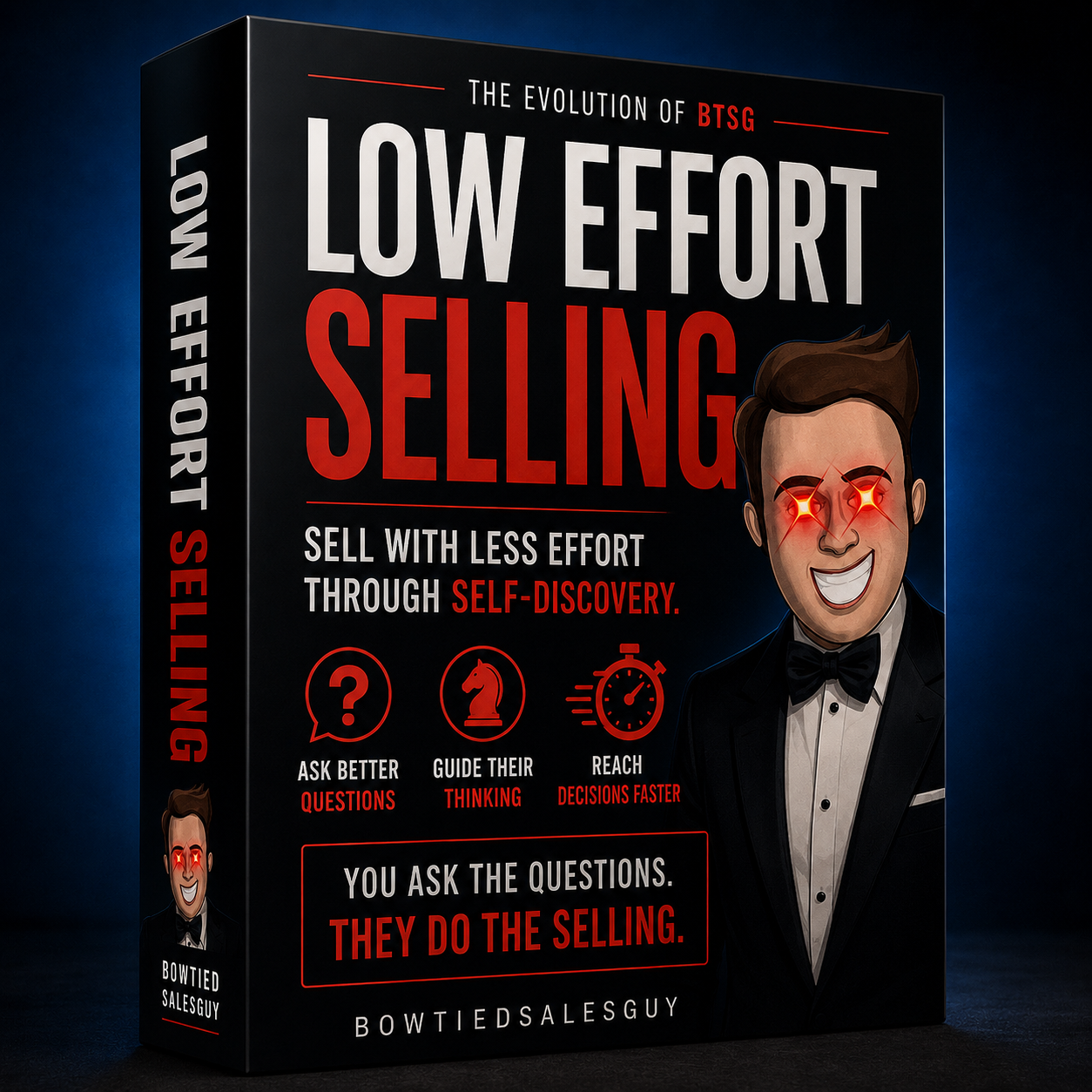
BowTiedSalesGuy – Low Effort Selling: Course Overview and Review
Introduction
Selling is an essential part of building a successful business. However, many entrepreneurs and business owners find the sales process challenging. They spend hours trying to attract prospects, explain their offers, follow up with potential customers, and convert conversations into paying clients.
The challenge is not always a lack of effort. Often, it comes from an inefficient sales approach. Complicated processes, unnecessary conversations, and unclear messaging can make selling more difficult than it needs to be.
BowTiedSalesGuy – Low Effort Selling is a course title that may interest entrepreneurs, online business owners, freelancers, and sales professionals who want to explore a simpler approach to selling. The central idea behind low-effort selling is to make the sales process more focused, practical, and efficient.
Instead of making every interaction complicated, businesses can benefit from understanding their customers, communicating their value clearly, and reducing unnecessary friction during the buying process.
This product description explores the broader concepts associated with low-effort selling. It also explains who may find this subject useful and what to consider before purchasing the program. Specific course features and curriculum details should be verified through the official product information.
Course Overview
Low-effort selling is an approach that focuses on making sales activities more straightforward. It encourages business owners to examine how they attract customers, present their offers, and guide interested prospects toward purchasing decisions.
Traditional sales approaches sometimes involve lengthy scripts, excessive follow-ups, and complicated persuasion techniques. Although some methods can be useful, they may also create unnecessary work.
A more efficient approach starts with understanding what potential customers actually need.
For example, someone interested in a particular service usually wants to understand three things: what the service offers, how it addresses their problem, and whether it represents good value.
When a business communicates these points clearly, the buying process can become easier for both sides.
The subject of BowTiedSalesGuy – Low Effort Selling relates to this broader idea of simplifying sales and improving the way businesses communicate with potential buyers.
However, the exact lessons, teaching format, and resources included in this particular program have not been independently confirmed here. Prospective buyers should review the official course outline before making a purchase.
What Is Low-Effort Selling?
Low-effort selling does not mean avoiding work or expecting customers to purchase without understanding an offer. Instead, it involves reducing unnecessary complexity in the sales process.
A business can spend considerable time trying to convince people who were never interested in its product. Similarly, unclear pricing or confusing product descriptions can prevent qualified prospects from making decisions.
An efficient sales process addresses these problems.
It focuses on attracting relevant prospects, presenting useful information, answering important questions, and making the next step clear.
For instance, consider a freelancer offering website design services. Instead of sending lengthy explanations to every potential client, the freelancer can create a clear service presentation.
This presentation might explain the type of work offered, the intended customer, and the process for getting started. As a result, interested prospects can understand the offer more quickly.
The objective is not to remove personal communication. Rather, it is to make every sales interaction more purposeful.
What Learners Can Expect to Explore
The exact curriculum of BowTiedSalesGuy – Low Effort Selling should be checked against the provider’s current course description. Nevertheless, the wider subject of efficient selling involves several important business concepts.
1. Simplifying the Sales Process
A complicated sales process can create problems for both businesses and customers.
Potential buyers may become confused when they encounter too many steps, unclear instructions, or excessive information. Meanwhile, business owners may waste time managing unnecessary conversations.
Simplifying the process starts with identifying the steps that genuinely contribute to a purchase.
For example, a business might review its customer journey and remove unnecessary forms or confusing instructions. It can also make product information easier to understand.
Consequently, customers can spend less time figuring out how to purchase.
2. Understanding the Right Audience
Not every person is a suitable customer for every product.
Trying to sell to everyone can lead to wasted time and ineffective communication. Therefore, understanding the target audience is an important part of an efficient sales strategy.
Businesses should consider their customers’ needs, challenges, preferences, and purchasing motivations.
For instance, a digital marketing service may appeal to business owners who want more qualified leads. However, someone looking for a completely different service may not be interested.
By understanding the intended audience, businesses can create more relevant offers and communicate with greater clarity.
3. Communicating Value Clearly
Customers need to understand what they are purchasing.
A product description filled with vague promises may create confusion. In contrast, clear communication explains what the product does and why it may be useful.
Value-based selling focuses on connecting an offer with the customer’s actual needs.
For example, rather than simply describing a software product as powerful, a business can explain the tasks it helps customers manage.
This makes the offer easier to evaluate.
Furthermore, clear messaging can reduce repetitive questions. Customers can find important information before starting a conversation with the seller.
4. Creating Better Offers
An offer is more than a product name or price. It represents the value a customer expects to receive.
A well-presented offer explains what is available, who it is intended for, and what the purchasing process involves.
Businesses should avoid adding unnecessary complexity. Instead, they can focus on making the product’s purpose and value easy to understand.
For example, a consultant can clearly explain the service, its scope, and the intended customer. This gives potential clients a better understanding of what they are considering.
The most effective offer is not necessarily the one with the most features. Rather, it is one that addresses a relevant customer need.
5. Improving Sales Conversations
Sales conversations should help customers make informed decisions.
However, some businesses rely too heavily on aggressive persuasion. This can make potential buyers uncomfortable and damage trust.
A more customer-focused approach involves listening carefully, understanding objections, and providing relevant information.
For instance, a prospect may hesitate because they do not understand the service or have concerns about the price.
Instead of immediately pushing for a purchase, a seller can address the actual concern.
This creates a more useful conversation. It also helps both parties determine whether the offer is suitable.
6. Reducing Unnecessary Follow-Ups
Following up with interested prospects can be an important part of selling. Nevertheless, repeated messages without a clear purpose may become frustrating.
An efficient follow-up strategy focuses on relevance and timing.
For example, a seller might provide additional information when a prospect requests it. Similarly, a business can send a useful reminder when someone has expressed genuine interest.
The goal is to maintain communication without creating unnecessary pressure.
Moreover, respectful follow-ups help businesses protect their reputation and customer relationships.
7. Building a More Efficient Customer Journey
The customer journey includes the different stages a person experiences before making a purchase.
These stages may involve discovering a product, researching its benefits, comparing alternatives, and completing an order.
A confusing customer journey can lead to abandoned purchases.
Therefore, businesses should examine how easily customers can move from interest to action.
Clear product pages, straightforward checkout instructions, and accessible support information can all contribute to a better buying experience.
8. Developing a Sustainable Sales Mindset
Selling does not need to involve constant pressure or complicated techniques.
A sustainable approach focuses on consistency, customer understanding, and clear communication.
Business owners can evaluate their sales activities to identify what works and what creates unnecessary effort.
Over time, this may help them develop a more organized approach to attracting and serving customers.
These concepts describe the broader subject of low-effort selling. They are not a confirmed list of lessons or modules included in the specific course.
Who Is BowTiedSalesGuy – Low Effort Selling Suitable For?
This course may be worth exploring if you want to understand how sales processes can become simpler and more efficient.
Entrepreneurs and Business Owners
Entrepreneurs often manage several responsibilities at once. They need to handle marketing, customer communication, product development, and sales.
Learning about efficient selling may help them evaluate where their current process creates unnecessary work.
Freelancers and Consultants
Freelancers regularly need to explain their services and communicate with potential clients.
A clear sales approach can help them present their value more effectively. It may also make initial conversations more focused and productive.
Online Business Owners
People running digital businesses often rely on product pages, landing pages, email communication, and online checkout systems.
Understanding customer behavior and sales communication can help them identify areas for improvement.
Sales Professionals
People working in sales may be interested in exploring more straightforward ways to communicate with prospects.
The subject may complement existing sales experience, particularly for professionals who want to focus on customer needs rather than unnecessary persuasion.
Beginners Learning Sales
Individuals who are new to entrepreneurship or selling may also find the topic relevant.
Understanding basic sales principles can help beginners develop better habits before building more complicated processes.
Key Benefits of Learning Low-Effort Selling
Studying efficient sales practices can offer several potential advantages.
Simpler sales activities: Understanding which actions matter can help businesses reduce unnecessary complexity.
Clearer communication: Explaining products and services effectively makes it easier for customers to understand an offer.
Better customer understanding: Focusing on customer needs can support more relevant sales conversations.
Improved time management: Identifying repetitive or unnecessary tasks may help business owners use their time more effectively.
More organized customer journeys: A straightforward buying process can make purchasing easier for potential customers.
Stronger customer relationships: Respectful communication can help establish trust and encourage better interactions.
More focused business decisions: Reviewing sales activities can help entrepreneurs identify opportunities to improve their processes.
These are potential advantages of studying the subject. They should not be interpreted as guaranteed results from purchasing this particular course.
Why a Simple Sales Strategy Matters
A business does not always need a complicated sales system to communicate effectively.
Sometimes, the biggest improvements come from addressing small problems.
For example, a product page may contain too much unnecessary information. A potential buyer might struggle to understand the main offer. By improving the structure and explaining the value more clearly, the business can create a better experience.
Similarly, a service provider might spend hours answering questions that could be addressed through a well-organized information page.
These improvements can reduce repetitive work while helping customers make informed decisions.
However, simplicity should not come at the expense of important details. Customers still need accurate information about pricing, conditions, product features, and purchasing terms.
Therefore, the objective should be to remove confusion rather than remove useful information.
What to Check Before Purchasing
Before purchasing BowTiedSalesGuy – Low Effort Selling, review the available product details carefully.
First, examine the official course description and syllabus. This will help you understand the actual subjects covered.
Next, verify the instructor information and the relationship between the product and the BowTiedSalesGuy brand.
You should also confirm the delivery format. Check whether the provider offers recorded lessons, live training, written materials, or other resources. Do not assume these features are included unless they are explicitly confirmed.
Additionally, review the current price, access period, and refund policy.
If the product listing mentions templates, scripts, bonuses, or additional resources, confirm exactly what is included.
Finally, compare the course with your business goals. A beginner may need fundamental sales education, while an experienced business owner may be looking for more advanced strategies.
Making these checks can help you decide whether the program is suitable for your needs.
Frequently Asked Questions
What Is BowTiedSalesGuy – Low Effort Selling?
BowTiedSalesGuy – Low Effort Selling is a course title associated with learning about simpler and more efficient sales approaches. Its exact curriculum and included resources should be confirmed through the official product listing.
What Does Low-Effort Selling Mean?
Low-effort selling refers to making sales activities more straightforward and purposeful. It emphasizes clear communication, relevant offers, customer understanding, and reducing unnecessary steps.
Who Should Consider This Course?
Entrepreneurs, freelancers, consultants, online business owners, and sales professionals may find the subject relevant. Beginners interested in learning sales fundamentals may also wish to explore it.
Can Low-Effort Selling Help Online Businesses?
The broader principles can be relevant to online businesses. Clear product information, straightforward checkout processes, and customer-focused communication can help create a better purchasing experience.
Does the Course Include Sales Scripts or Templates?
Specific scripts, templates, and downloadable resources have not been verified. Check the official course description for an accurate list of included materials.
Is This Course Suitable for Beginners?
The topic may interest beginners who want to understand sales fundamentals. However, the actual difficulty level should be confirmed through the provider’s course information.
Does Low-Effort Selling Mean Selling Without Effort?
No. It does not mean avoiding customer service, product development, or sales activities. Instead, the approach focuses on reducing unnecessary work and making important activities more efficient.
Will This Course Guarantee More Sales?
No sales results should be guaranteed. Business performance depends on factors such as product quality, pricing, market demand, customer experience, and how effectively strategies are applied.
How Can I Decide Whether This Course Is Worth Buying?
Review the curriculum, teaching format, included resources, and purchase conditions. Then compare the available material with your current sales challenges and learning objectives.
Final Thoughts
BowTiedSalesGuy – Low Effort Selling may be an interesting option for people who want to explore a simpler approach to sales and business development.
The broader concept is practical. Businesses can often improve their sales processes by understanding customers, communicating value clearly, and removing unnecessary complexity.
Furthermore, a customer-focused sales strategy can make interactions more useful for both buyers and sellers.
However, the value of this particular course depends on its confirmed content, teaching approach, and relevance to your goals. Therefore, review the official product information before purchasing.
If the material matches your interests, it may be worth considering as part of your business education and professional development journey.
Reviews
There are no reviews yet.