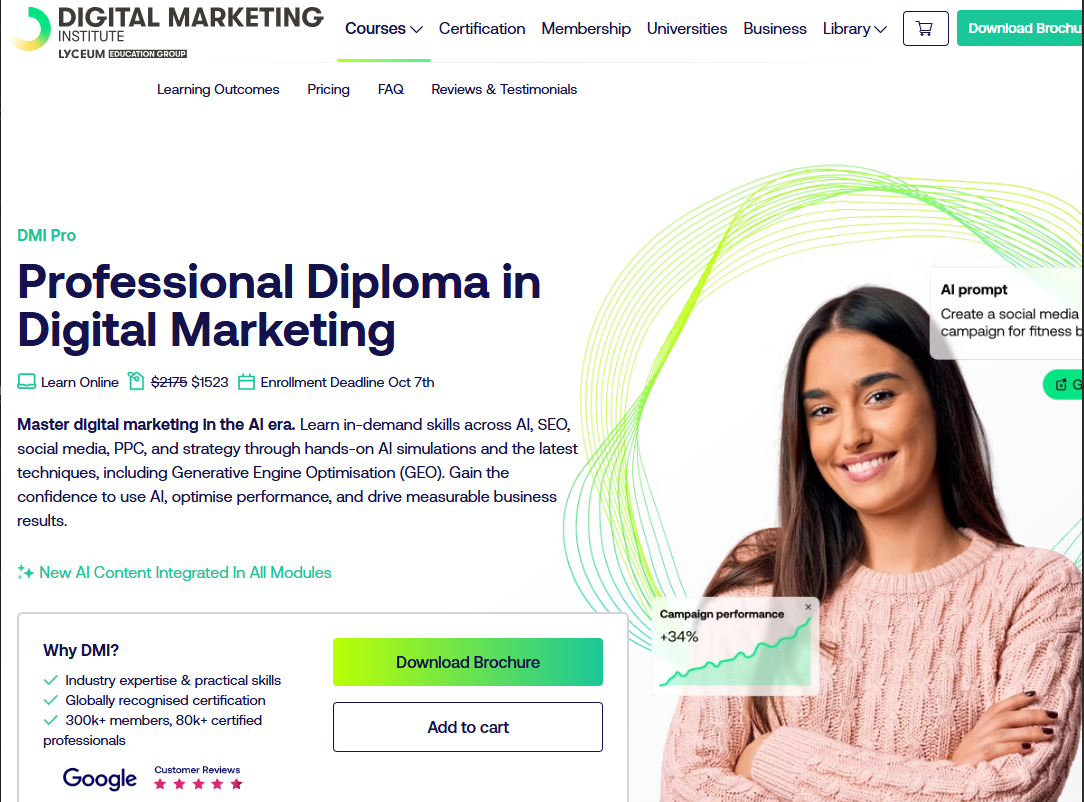
DMI Pro – Professional Diploma in Digital Marketing
$1,522.00 Original price was: $1,522.00.$85.00Current price is: $85.00.
- 24/7 Contact Support & Telegram - Ecomkevin_1
- You Can Request Any Courses
- Original Courses HD Qualite and links updated
Guaranteed Safe Checkout


Description
DMI Pro – Professional Diploma in Digital Marketing
Digital marketing has become a core part of how modern businesses attract customers, build visibility, generate leads, and grow online. As companies continue to rely on digital channels, practical marketing knowledge can be valuable for professionals, business owners, freelancers, and anyone looking to develop their capabilities in this field.
DMI Pro – Professional Diploma in Digital Marketing is positioned for learners who want to build a stronger understanding of professional digital marketing. Rather than approaching marketing as a collection of isolated tactics, the program can be viewed as an opportunity to develop a broader understanding of how different digital channels work together.
Whether you are starting your digital marketing journey or looking to strengthen your existing knowledge, a structured learning experience can make it easier to understand the principles behind modern online marketing.
DMI Pro – Professional Diploma in Digital Marketing Overview
Digital marketing covers a wide range of activities. These include search marketing, content, social media, email communication, paid advertising, analytics, customer journeys, and online brand development.
Because the field is so broad, learning individual techniques without understanding the bigger picture can be challenging. A professional diploma can provide a more structured way to explore the subject.
The DMI Pro Professional Diploma in Digital Marketing is therefore relevant to people who want to develop a more complete understanding of digital marketing and how it supports business objectives.
The course can be approached as a foundation for building practical marketing knowledge. It may also help learners identify areas where they want to develop deeper expertise as their careers progress.
Why Learn Digital Marketing?
Businesses increasingly need professionals who understand how customers discover, evaluate, and interact with brands online. Digital marketing connects businesses with audiences across multiple online touchpoints.
For example, a potential customer might discover a company through social media. Later, they may search for the brand online, read content, compare alternatives, and eventually make a purchase.
Understanding this journey is important for modern marketers.
Furthermore, digital marketing is measurable. Marketers can use data to understand audience behaviour, evaluate campaigns, and make more informed decisions.
This makes digital marketing different from many traditional approaches. Instead of relying only on assumptions, businesses can often use performance data to understand what is working and where improvements may be needed.
What Learners Can Expect to Learn
The exact structure and coverage of the program should always be reviewed against the current course materials. However, learners interested in professional digital marketing can generally expect to develop knowledge across important areas of the discipline.
Digital Marketing Fundamentals
A strong understanding of fundamentals is useful before moving into more specialised marketing activities.
Learners can develop an understanding of digital marketing concepts, online customer behaviour, marketing objectives, audience research, and the role of different digital channels.
These principles provide context for the more practical aspects of online marketing.
Search and Online Visibility
Search plays an important role in how people discover information, products, and services.
Understanding search marketing involves more than creating content. It also requires awareness of search intent, relevant topics, website structure, content quality, and the relationship between user needs and online visibility.
This knowledge can help marketers create more useful digital experiences.
Content Marketing
Content is another important part of modern digital communication.
Effective content should provide value to the intended audience. Depending on the business, this can include educational articles, videos, social content, guides, product information, and other formats.
A professional digital marketing education can help learners understand how content fits into a wider marketing strategy.
Social Media Marketing
Social media provides businesses with opportunities to communicate directly with their audiences.
However, successful social media marketing involves more than publishing posts. Marketers need to understand audiences, messaging, content planning, engagement, consistency, and the objectives behind each campaign.
Developing these skills can help learners approach social media in a more strategic way.
Paid Digital Advertising
Paid advertising is an important part of many digital marketing strategies.
Learners can benefit from understanding the principles behind online advertising, including audience targeting, campaign objectives, creative messaging, and performance measurement.
The goal should not simply be to spend money on advertising. Instead, marketers need to understand why a campaign exists and how its performance should be evaluated.
Email and Customer Communication
Email remains an important digital communication channel for many businesses.
Understanding how businesses communicate with prospects and existing customers can help marketers think beyond initial acquisition.
Effective communication should be relevant, useful, and aligned with the customer’s stage in the buying journey.
Analytics and Measurement
Data plays a central role in modern marketing.
Marketing analytics can help businesses understand website activity, campaign performance, audience behaviour, conversions, and other important indicators.
Learning how to interpret marketing data can help professionals make better decisions rather than relying entirely on assumptions.
Who Is This Course Suitable For?
The DMI Pro – Professional Diploma in Digital Marketing may be suitable for a range of learners with different professional goals.
Beginners
People who are new to digital marketing can use structured learning to build a foundation. Starting with fundamental concepts can make more advanced topics easier to understand later.
Marketing Professionals
Existing marketers may find a broader digital marketing education useful for strengthening their understanding of online channels and modern marketing practices.
It can also help professionals identify areas where they may need additional knowledge.
Business Owners
Business owners increasingly need to understand how digital channels contribute to customer acquisition and brand growth.
A stronger understanding of digital marketing can help business owners communicate more effectively with marketing teams and make better-informed decisions.
Freelancers and Consultants
Freelancers can benefit from developing a broader understanding of digital marketing. This knowledge can support communication with clients and help them understand how individual marketing activities fit into wider business goals.
Career Changers
People considering a move into digital marketing may also find professional education useful.
A structured course can provide a starting point for learning terminology, concepts, channels, and strategic thinking before pursuing a specific career direction.
Key Benefits of Studying Digital Marketing
One of the biggest advantages of learning digital marketing is the breadth of knowledge it can provide.
Instead of focusing on one isolated platform, learners can develop an understanding of how different marketing activities connect.
Another benefit is improved marketing awareness. Understanding audience behaviour, content, advertising, search, social media, and analytics can make it easier to evaluate digital campaigns.
The course can also encourage strategic thinking. Digital marketing works best when individual activities support clear objectives.
For example, content, advertising, social media, and email should not necessarily operate as completely separate activities. Instead, they can contribute to a broader customer journey.
Additionally, digital marketing knowledge can remain useful across different industries. Almost every industry has some form of online presence, making digital skills relevant to a wide range of professional environments.
A Practical Way to Approach the Course
Getting the most value from a professional digital marketing course requires more than simply completing lessons.
First, focus on understanding the concepts rather than memorising terminology. Digital platforms and tools can change, but fundamental marketing principles remain useful.
Next, connect each topic to real business situations. Consider how a company might attract an audience, build trust, generate leads, and encourage customers to take action.
Furthermore, pay attention to measurement. Marketing decisions become more meaningful when they can be evaluated using relevant data.
Finally, continue learning after completing the program. Digital marketing evolves quickly, so ongoing curiosity is an important part of developing a long-term career in the field.
Is DMI Pro – Professional Diploma in Digital Marketing Worth Considering?
The answer depends on your goals, existing experience, and preferred learning style.
If you want a structured introduction to professional digital marketing, a diploma-level program may provide useful direction. It can help bring together concepts that are often learned separately through blogs, videos, social platforms, and individual tutorials.
However, no course should be viewed as a substitute for practical experience.
Digital marketing is a hands-on discipline. The strongest learning often happens when knowledge is applied to real websites, campaigns, content, audiences, and business problems.
Therefore, learners should approach the program as part of a broader development process.
Frequently Asked Questions
What is DMI Pro – Professional Diploma in Digital Marketing?
It is a professional digital marketing learning program designed around developing knowledge of modern digital marketing concepts and practices.
Who should consider this digital marketing diploma?
It may be useful for beginners, marketing professionals, business owners, freelancers, consultants, and people considering a career change into digital marketing.
Do I need previous digital marketing experience?
Previous experience is not necessarily required for someone who is beginning their learning journey. However, learners should review the current course requirements before enrolling.
What can I learn from a professional digital marketing course?
Digital marketing education can cover areas such as marketing fundamentals, online visibility, content marketing, social media, paid advertising, customer communication, analytics, and digital strategy.
The precise topics depend on the current curriculum.
Can business owners benefit from digital marketing training?
Yes. Business owners can benefit from understanding how digital channels support customer acquisition, communication, visibility, and business growth.
Is digital marketing useful for freelancers?
Yes. Digital marketing knowledge can be useful for freelancers who provide marketing services or work with businesses that depend on online customer acquisition.
Is a diploma enough to become a digital marketing expert?
A diploma can provide structured knowledge, but expertise develops through continued learning and practical experience. Real-world projects and ongoing practice are equally important.
Should beginners study digital marketing?
Digital marketing can be a suitable field for beginners who are interested in business, communication, technology, content, advertising, or online growth.
A structured program can provide a clearer starting point than trying to learn everything independently.
Final Thoughts
Digital marketing continues to influence how businesses communicate with customers and compete online. As a result, understanding the fundamentals of the field can be valuable across many professional roles.
DMI Pro – Professional Diploma in Digital Marketing can be considered by learners who want a structured way to develop their understanding of digital marketing.
The most important factor is how the knowledge is applied. By combining structured education with practical projects, experimentation, analysis, and continuous learning, students can build a stronger foundation for working with modern digital channels.
For anyone looking to develop professional digital marketing knowledge, this program is worth exploring alongside its current curriculum, learning format, and individual requirements.
Reviews
There are no reviews yet.