Gregory John – Build an AI agent platform with Claude Agents
$99.00 Original price was: $99.00.$27.00Current price is: $27.00.
- 24/7 Contact Support & Telegram - Ecomkevin_1
- You Can Request Any Courses
- Original Courses HD Qualite and links updated
Guaranteed Safe Checkout


Description
Gregory John – Build an AI Agent Platform with Claude Agents
Artificial intelligence is moving beyond simple chatbots and prompts. Modern AI applications can use tools, work with files, coordinate multiple agents, and complete multi-step tasks. For developers and aspiring AI builders, understanding how to create these systems is becoming increasingly valuable.
Gregory John – Build an AI Agent Platform with Claude Agents is a practical Buildcamp course focused on building a complete AI agent platform from the ground up. Instead of focusing only on individual prompts or simple demonstrations, the course teaches an end-to-end approach to developing a multi-user AI application with authentication, databases, agent orchestration, external integrations, file processing, usage tracking, and deployment.
According to the official course page, the program contains 25 lessons across six sections and has a total duration of approximately 3 hours and 3 minutes. It is listed at beginner difficulty and is designed for learners who want to explore full-stack AI development with modern AI coding tools.
What Is Gregory John’s AI Agent Platform Course?
The course is designed around the idea of building a feature-rich AI agent platform rather than simply experimenting with an isolated AI assistant.
Gregory John takes learners through the major components required to turn an AI-agent concept into a usable application. The curriculum includes frontend development, authentication, databases, security, agent orchestration, external tools, document processing, agent sessions, usage tracking, and deployment.
The course also emphasizes AI-assisted development through tools such as Claude Code and Codex, allowing learners to explore how modern AI coding agents can assist with planning, development, refactoring, and implementation.
Learn Claude Managed Agents and Agent Orchestration
One of the central topics is Claude Managed Agents. Learners are introduced to creating and managing AI agents and running agent missions through managed sessions.
This is particularly useful for people interested in agent orchestration, where an application needs to coordinate AI agents and give them access to tools, information, and specific tasks.
The course also covers Agent Squads and Sessions, helping learners understand how multiple agents can participate in structured workflows rather than relying on a single conversational model.
This makes the course relevant to developers exploring multi-agent systems and modern AI application architecture.
Build With Next.js, Supabase and Codex
The technical stack is another important part of the course.
The curriculum includes Next.js, which is used to build the application interface and full-stack functionality. Learners also work with Supabase for authentication, data storage, databases, and row-level security.
Codex and Claude Code are incorporated into the development workflow. Rather than treating AI coding tools as simple autocomplete systems, the course demonstrates how they can be used as part of the development process.
For someone interested in AI coding agents, this combination provides a useful introduction to building applications with an AI-assisted development workflow.
Connect External Tools With Pipedream
AI agents become significantly more useful when they can access information outside the application.
The course introduces Pipedream for connecting external tools, including Google Drive. Learners can work with company files and allow agents to access information from documents and other supported file formats.
The curriculum specifically mentions working with Docs, Sheets, PDFs, and DOCX files. This makes the project more practical than a basic chatbot because the agent can work with real-world business information.
Create a Full-Stack AI Application
Another major advantage of the course is its full-stack approach.
The project covers more than the AI component itself. Learners also explore authentication, storage, security, dashboard design, branding, and application UX.
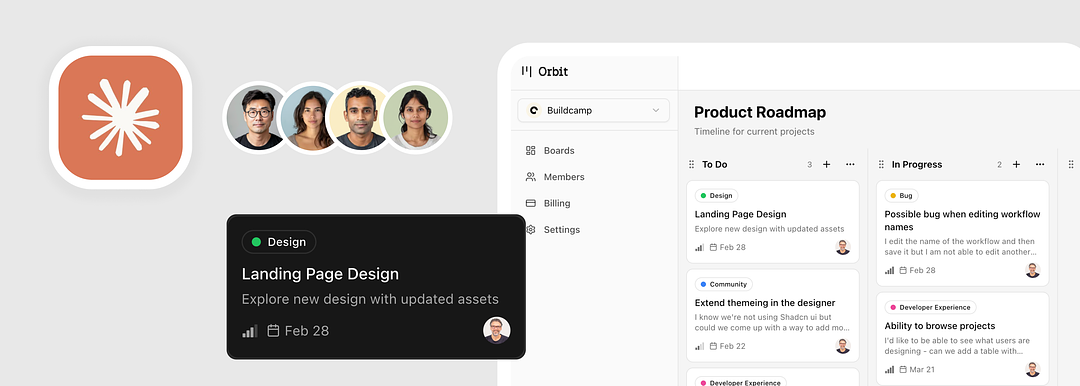
The official curriculum includes a polished dashboard with a custom sidebar, icons, and branding. This is important because an AI agent can have impressive capabilities but still feel unfinished if the surrounding application has poor usability.
By learning these elements together, students can better understand how AI SaaS development works from both the technical and product perspectives.
Track AI Usage and Costs
Building an AI application also means thinking about usage and expenses.
The course includes token usage and cost tracking as part of the platform. It also covers creating an admin dashboard.
This is an important production-oriented concept because developers building customer-facing AI applications need to understand how users consume AI resources and how those costs can be monitored.
Deploy Your AI Agent Platform With Vercel
After building the application, the course covers deployment using Vercel and adding a custom domain.
This provides learners with a path from development to a live application. The course therefore goes beyond local experimentation and introduces the deployment stage needed when building an AI product for actual users.
The official syllabus specifically includes adding a custom domain and deploying the application to live customers through Vercel.
Who Is This Course For?
Gregory John – Build an AI Agent Platform with Claude Agents may be particularly useful for:
- Developers interested in AI agents
- Beginners exploring AI-assisted software development
- Entrepreneurs interested in AI SaaS products
- Full-stack developers who want to add agent functionality
- People learning Claude Code and Codex
- Developers interested in multi-agent systems
- Builders exploring Next.js and Supabase
- Anyone wanting to understand how an AI agent platform can be structured
Buildcamp states that no prior coding experience is required for the course, although learners should still expect to encounter concepts involving web development, databases, authentication, APIs, and deployment.
What You Can Expect to Learn
The published curriculum includes six main sections covering getting started, Next.js and Codex setup, Supabase foundations, Claude Managed Agents, Pipedream and company files, and Agent Squads and Sessions.
The course also covers generating Google Docs, Sheets, and PDF outputs from agent runs, monitoring usage, creating an administrative dashboard, and deploying the completed application.
Final Thoughts
The biggest strength of this course is its end-to-end approach. Instead of teaching AI agents as an isolated concept, Gregory John combines agents with frontend development, databases, authentication, external integrations, security, dashboards, and deployment.
If your goal is to understand how to build an AI agent platform with Claude Agents, the curriculum provides a focused introduction to the technologies and development workflow involved.
It is especially interesting for people who want to move from experimenting with AI prompts toward actually building AI-powered applications.
The course is currently listed by Buildcamp at $199, with lifetime access and future course updates stated on the sales page.
Overall, Gregory John’s AI Agent Platform course is best viewed as a practical introduction to full-stack agent development rather than a general-purpose AI course.
Frequently Asked Questions
What is Gregory John – Build an AI Agent Platform with Claude Agents?
It is a Buildcamp course by Gregory John that teaches learners how to create a multi-user AI agent platform using technologies such as Claude Managed Agents, Claude Code, Codex, Next.js, Supabase, Pipedream, and Vercel.
Is Gregory John’s AI Agent Platform course beginner-friendly?
Yes. Buildcamp officially lists the course difficulty as Beginner and states that no prior coding experience is required. However, learners will still encounter web development and AI application concepts throughout the lessons.
What technologies are taught in the course?
The course covers Claude Code, Claude Managed Agents, Codex, Next.js, Supabase, Pipedream, and Vercel. It also demonstrates integrations involving Google Drive and different document formats.
Does the course teach multi-agent systems?
Yes. The curriculum includes Agent Squads and Sessions, along with agent orchestration and Managed Agents Sessions.
Does it teach AI SaaS development?
The course covers several important components of an AI SaaS-style application, including authentication, databases, storage, security, dashboards, agent functionality, usage tracking, and deployment.
How long is the course?
The official sales page lists 25 lessons with a total duration of approximately 3 hours and 3 minutes.
Does the course teach Next.js and Supabase?
Yes. Next.js and Supabase are both part of the curriculum, with Supabase being used for authentication, data, storage, and row-level security.
Does the course teach deployment?
Yes. The course includes deploying the application to live customers using Vercel and adding a custom domain.
Who teaches the course?
The instructor is Gregory John, identified by Buildcamp as its founder.
Is the course worth learning for someone interested in AI agents?
It can be a good option if your goal is specifically to learn the process of building a full-stack AI agent application. The course is relatively short and focuses on a practical project rather than covering every AI-agent framework available.
Reviews
There are no reviews yet.