
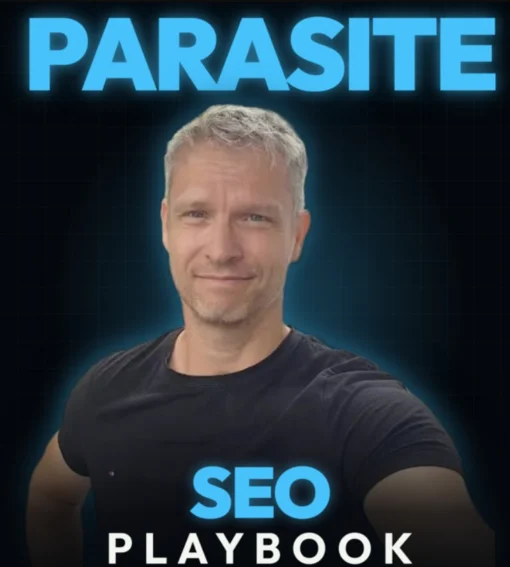
Jesper Nissen – Parasite SEO Playbook
$299.00 Original price was: $299.00.$20.00Current price is: $20.00.
- 24/7 Contact Support & Telegram - Ecomkevin_1
- You Can Request Any Courses
- Original Courses HD Qualite and links updated
Guaranteed Safe Checkout


Description
Jesper Nissen – Parasite SEO Playbook: Course Overview, Benefits, and Review
Introduction
Search engine optimization continues to evolve as businesses look for new ways to increase online visibility. However, ranking a website on Google can take time, especially in competitive niches. As a result, marketers and website owners explore different strategies to improve their search visibility and attract relevant visitors.
Jesper Nissen – Parasite SEO Playbook is a course title associated with the concept of Parasite SEO. This approach focuses on publishing content on established third-party websites to benefit from their existing authority and search visibility. For marketers who want to understand alternative content distribution strategies, this topic offers an interesting area to explore.
Parasite SEO differs from traditional SEO because it places greater emphasis on leveraging external publishing platforms rather than relying exclusively on your own website. Nevertheless, success depends on the platform, the quality of the content, the search query, and the publisher’s rules.
This product description explains the subject of the playbook, the concepts learners can explore, and the people who may find this topic useful. It also covers the potential advantages, limitations, and practical considerations of Parasite SEO.
What Is Jesper Nissen – Parasite SEO Playbook?
Jesper Nissen – Parasite SEO Playbook is a course title centered on Parasite SEO, a search marketing strategy that uses established websites to publish content targeting relevant search queries.
The term Parasite SEO generally describes an approach in which marketers seek visibility through third-party domains that already have an established presence in search results. Depending on the platform and topic, this can include publishing useful articles, contributing editorial content, or creating content through permitted publishing features.
The underlying idea is straightforward. Instead of building authority entirely on a new website, marketers explore whether an established platform can provide another route to reaching an audience.
However, this strategy requires careful planning. Not every high-authority website allows promotional content, and a platform’s overall authority does not guarantee that an individual page will rank. Therefore, understanding platform policies and content quality is essential.
The exact curriculum, included resources, lesson structure, and additional materials for this specific product should be confirmed through its official product information. This description focuses on the subject indicated by the course title rather than assuming unverified features.
Understanding the Parasite SEO Strategy
Parasite SEO is often discussed in competitive niches where ranking new websites can be challenging. The strategy involves identifying established publishing platforms that are relevant to a topic and understanding how their content appears in search results.
For example, an established publication may already receive organic traffic for a particular subject. A contributor who publishes a genuinely useful article on that publication may have an opportunity to reach readers through its existing audience and search visibility.
However, this outcome is never guaranteed. Search engines evaluate individual pages using multiple signals, and established domains do not automatically rank every piece of content they publish.
Furthermore, publishing permissions vary widely. Some websites accept guest contributions, while others restrict promotional content or prohibit certain commercial practices. Consequently, marketers should understand the rules before choosing a platform.
A responsible Parasite SEO strategy focuses on relevance, originality, reader value, and compliance. Rather than treating established websites as shortcuts, marketers should consider them potential publishing partners with their own standards and audiences.
What Learners Can Expect to Learn
The precise lessons included in Jesper Nissen – Parasite SEO Playbook have not been independently established here. Nevertheless, learners exploring this subject can benefit from understanding several important areas of Parasite SEO and modern search marketing.
1. The Fundamentals of Parasite SEO
First, learners can explore how Parasite SEO differs from conventional website optimization.
Traditional SEO often involves improving your own website’s technical performance, content, internal links, and authority. In contrast, Parasite SEO focuses on the potential search visibility of content published on external platforms.
Understanding this distinction helps marketers evaluate when third-party publishing might support their broader content strategy.
2. Finding Relevant Publishing Platforms
Platform selection is an important consideration. A website may have strong overall authority but still be unsuitable for a particular subject.
Therefore, marketers should assess topical relevance, editorial standards, publishing permissions, audience quality, and the visibility of comparable pages. They should also examine whether a platform allows the intended type of content.
Choosing a relevant publication is generally more sensible than selecting a website based on authority metrics alone.
3. Understanding Search Intent
Search intent refers to the reason behind a person’s search query. Some people want information, while others are comparing solutions or preparing to make a purchase.
For instance, an informational article should answer a reader’s questions clearly. Meanwhile, a comparison article should explain meaningful differences between available options.
By understanding search intent, marketers can create content that better matches what users need. As a result, their publishing decisions become more focused and useful.
4. Creating Helpful Content
Content quality remains essential, regardless of where an article appears.
Useful content should answer the main question, provide accurate information, and offer meaningful context. It should also be easy to read and structured around the reader’s needs.
Additionally, original examples, clear explanations, and relevant supporting information can make an article more valuable. Publishing thin content solely to target a search query is unlikely to provide lasting benefits.
5. Evaluating Keyword Opportunities
Search query research can help marketers identify topics that match their expertise and audience.
A thoughtful approach considers search intent, competition, topical relevance, and the suitability of available publishing platforms. It also recognizes that third-party pages and owned websites may serve different purposes.
Consequently, marketers should compare opportunities carefully instead of assuming every competitive query is suitable for Parasite SEO.
6. Understanding Performance Measurement
Search visibility is only one part of a successful content strategy. Marketers should also consider relevant traffic, audience engagement, referral visits, and meaningful conversions where measurement is available.
Moreover, results should be evaluated over time. Search rankings fluctuate, and a page that performs well initially may lose visibility later.
A practical measurement process helps marketers distinguish genuine progress from temporary changes.
7. Recognizing Risks and Limitations
External publishing comes with limitations. Publishers can change their policies, remove articles, restrict links, or modify their platforms. Search engines may also change how they evaluate particular types of content.
For this reason, businesses should avoid depending entirely on third-party pages. Building a useful website, developing original resources, and creating relationships with a genuine audience can provide a more balanced long-term strategy.
Key Benefits of Studying Parasite SEO
Learning about Parasite SEO can help marketers make better-informed decisions about content distribution. However, the value depends on how the strategy fits their goals and how responsibly they apply it.
Explore an alternative approach to search visibility. Parasite SEO introduces marketers to publishing opportunities beyond their own websites. This can broaden their understanding of organic search strategies.
Understand established publishing platforms. Studying this approach encourages marketers to assess how external publications attract readers and organize content.
Improve content planning. Search intent, topic relevance, and audience needs remain important considerations. These principles can also strengthen conventional content marketing.
Develop a broader marketing perspective. External publishing can complement owned content, referral traffic, public relations, and other legitimate audience-building activities.
Make more informed decisions. Understanding the limitations of Parasite SEO helps marketers evaluate whether a particular opportunity deserves their time and resources.
Importantly, these are potential educational benefits of studying the subject. They should not be interpreted as guaranteed results or verified claims about the specific course.
Who Is This Course Suitable For?
Jesper Nissen – Parasite SEO Playbook may be relevant to people interested in search marketing, content publishing, and alternative approaches to organic visibility.
SEO Professionals
SEO specialists may want to understand how third-party publishing fits into a broader search strategy. In addition, studying the approach can help them compare external publishing opportunities with conventional website optimization.
Affiliate Marketers
Affiliate marketers often explore different ways to attract visitors to relevant offers. Learning about third-party publishing can help them assess content distribution opportunities while respecting platform policies and disclosure requirements.
However, affiliate links and promotional content should only be used where permitted.
Bloggers and Content Creators
Bloggers may find the subject useful when exploring new audiences or researching publishing partnerships. Nevertheless, they should continue investing in their own websites and original content.
Digital Marketing Agencies
Agencies may want to understand Parasite SEO when evaluating different content marketing approaches for clients. Before implementing any strategy, they should assess the client’s goals, industry requirements, and risk tolerance.
Entrepreneurs and Website Owners
Business owners who want to understand organic search opportunities may benefit from learning how external platforms influence content distribution. Even so, this approach should be considered alongside other marketing channels rather than as a complete replacement for them.
Beginners can also explore the subject, although a basic understanding of search engines, content creation, and website publishing will make the concepts easier to evaluate.
Parasite SEO vs. Traditional SEO
Both approaches aim to improve online visibility, but they differ in where the content is published and who controls the underlying website.
Traditional SEO focuses primarily on optimizing a website that you own or manage. This includes technical improvements, useful content, site structure, user experience, and relevant links.
Parasite SEO, by comparison, focuses on content published on third-party websites. This can offer access to established audiences, but it also introduces additional dependencies.
For example, a business may have limited control over how long an external article remains available. It may also be unable to change the publisher’s technical settings or content policies.
Therefore, the two approaches can serve different purposes. A balanced strategy often prioritizes a strong owned website while exploring legitimate external publishing opportunities where they provide genuine value.
Best Practices for Responsible Parasite SEO
Anyone studying Parasite SEO should understand the importance of sustainable, user-focused marketing.
Start by choosing a platform that genuinely fits the subject. Next, review its editorial guidelines and confirm that your intended content is allowed.
Afterward, create original material that answers the reader’s question. Avoid copying existing articles, publishing misleading claims, or producing pages with little value beyond promoting a product.
Link placement also requires care. Links should be relevant, useful, and consistent with the publisher’s rules. Paid placements and sponsored content should follow applicable disclosure requirements.
Additionally, avoid tactics designed primarily to manipulate search rankings. Search engine policies may restrict certain practices, including scaled content abuse, manipulative link schemes, and attempts to exploit a website’s reputation through third-party content.
Finally, maintain a diversified marketing strategy. Build your own website, develop helpful resources, and cultivate direct relationships with your audience. This reduces dependence on any single publishing platform.
Frequently Asked Questions
What is Jesper Nissen – Parasite SEO Playbook?
It is a course title associated with learning about Parasite SEO, a strategy involving content published on established third-party websites to pursue search visibility. The exact course curriculum and included materials should be verified through official product information.
What is Parasite SEO?
Parasite SEO is a search marketing approach that seeks visibility through content published on external websites with an established search presence. Its effectiveness depends on multiple factors, including content quality, platform relevance, competition, and search engine evaluation.
Is Parasite SEO different from traditional SEO?
Yes. Traditional SEO generally focuses on improving a website you own or manage. Parasite SEO focuses on third-party publishing opportunities. Both require useful content and a clear understanding of search intent.
Reviews
There are no reviews yet.