
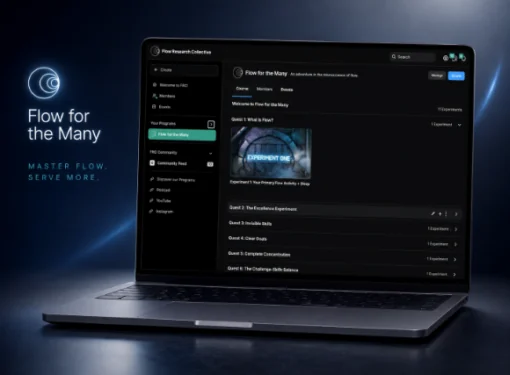
Steven Kotler – Flow For the Many
$897.00 Original price was: $897.00.$40.00Current price is: $40.00.
- 24/7 Contact Support & Telegram - Ecomkevin_1
- You Can Request Any Courses
- Original Courses HD Qualite and links updated
Guaranteed Safe Checkout


Description
Steven Kotler – Flow For the Many: Course Overview and Review
Introduction
Have you ever been so focused on a task that you completely lost track of time? Perhaps you were working on a creative project, solving a difficult problem, or learning a new skill. In those moments, distractions seemed to disappear, and your attention became fully absorbed in what you were doing. This experience is often associated with a psychological state known as flow.
Steven Kotler – Flow For the Many is a course title that will interest people exploring peak performance, human potential, productivity, and the science of flow. Flow is commonly described as a state of deep concentration and involvement. During this experience, people may feel more engaged with their activities and less distracted by their surroundings.
The subject is particularly relevant to people who want to understand how attention, motivation, creativity, and performance work together. Moreover, it offers an interesting perspective on how individuals can create conditions that support deeper engagement in everyday activities.
If you are researching Steven Kotler’s Flow For the Many before purchasing, this product description will help you understand the subject, its potential relevance, and what to consider before enrolling.
Course Overview
Flow is a concept that has attracted attention in psychology, neuroscience, sports, creativity, and personal development. It describes an experience in which attention becomes strongly focused on an activity.
Steven Kotler is widely associated with research and writing about flow, peak performance, and human potential. His work explores how people can understand and apply the principles behind exceptional performance.
Flow For the Many, by its title, suggests an interest in making the principles of flow relevant to a wider audience. Rather than treating peak performance as something reserved for elite athletes or exceptional professionals, the subject invites people to consider how deeper engagement might apply to ordinary activities.
For example, a writer may become deeply absorbed while developing an article. Similarly, an entrepreneur might experience intense concentration while solving a business problem. A student may become fully engaged while learning a challenging subject.
These experiences demonstrate why flow is relevant beyond sports or high-pressure professional environments.
The exact curriculum, lesson structure, delivery format, and included resources for this particular course should be confirmed through the official product listing. Therefore, this description focuses on the broader principles associated with flow rather than assuming specific course features.
What Is the Flow State?
The flow state is a psychological experience characterized by deep concentration, strong involvement, and a sense of engagement with an activity.
During flow, attention becomes focused on the task at hand. As a result, unrelated distractions may become less noticeable.
People sometimes describe flow as being completely absorbed in what they are doing. They may also experience a stronger connection between their actions and the activity’s progress.
However, flow does not simply mean working harder or staying busy. It involves a particular quality of attention and engagement.
Several characteristics are commonly associated with flow:
- Deep concentration on a specific activity.
- A clear understanding of the immediate task.
- A balance between challenge and personal ability.
- Reduced awareness of unrelated distractions.
- A sense of involvement in the process.
- Immediate feedback from the activity.
- Strong motivation to continue.
Not everyone experiences flow in the same way. Furthermore, it is not something that can always be switched on whenever desired.
Understanding its characteristics can nevertheless help people recognize the conditions that may support it.
What Learners Can Expect to Explore
The confirmed syllabus for Steven Kotler – Flow For the Many has not been established here. However, the broader subject connects to several important areas of learning.
1. Understanding the Science of Flow
Flow is more than a productivity trend. It is a concept studied in psychology and related fields.
Understanding its foundations can help learners recognize why certain activities create deeper engagement than others.
For example, a task that is too easy may produce boredom. On the other hand, an activity that feels overwhelmingly difficult may create frustration.
Between these extremes, there may be a level of challenge that encourages concentration and involvement.
Exploring this relationship can help people think more carefully about how they approach work, learning, and creative activities.
2. The Relationship Between Challenge and Skill
One important concept associated with flow is the balance between challenge and ability.
When an activity matches a person’s current skill level while still requiring effort, it may create a more engaging experience.
Consider someone learning to play a musical instrument. Repeating something they already know may become uninteresting. However, attempting a piece that is far beyond their ability may lead to frustration.
A suitable challenge provides room for improvement while remaining achievable.
Therefore, understanding this balance may help individuals select tasks that encourage learning and sustained attention.
3. Improving Focus and Concentration
Modern environments contain many potential distractions. Notifications, unnecessary interruptions, and frequent task switching can make sustained concentration difficult.
Flow provides a useful framework for thinking about attention.
Instead of constantly moving between different activities, people can consider how to create more focused periods of work.
For instance, a writer might benefit from defining a clear objective before beginning a writing session. Similarly, a student could divide a difficult subject into manageable learning tasks.
These approaches do not guarantee flow. Nevertheless, they can create a more structured environment for concentration.
4. Exploring Motivation and Engagement
Motivation influences how people approach challenging activities.
Some tasks are driven by external rewards, such as money, recognition, or deadlines. Others are engaging because the activity itself feels meaningful or enjoyable.
Flow is often discussed alongside intrinsic motivation, which refers to participating in an activity because of the satisfaction it provides.
Understanding this relationship may help learners reflect on what makes certain activities interesting.
Moreover, it can encourage people to identify projects that connect with their personal interests and abilities.
5. Creativity and Problem-Solving
Creative work often requires sustained attention. Writers, designers, musicians, entrepreneurs, and researchers may spend considerable time developing ideas or solving complex problems.
A deeper understanding of flow may help explain why some creative sessions feel more productive and engaging than others.
For example, a designer working on a difficult concept may become absorbed in experimenting with different possibilities.
Likewise, an entrepreneur might spend an extended period examining a business challenge without becoming distracted by unrelated tasks.
Although flow does not guarantee creative success, understanding the concept can provide useful perspectives on the creative process.
6. Applying Flow to Everyday Activities
Flow is not limited to professional achievements or competitive sports.
It may occur during hobbies, exercise, learning, cooking, writing, and other meaningful activities.
For example, someone who enjoys gardening might become deeply involved in planning and maintaining a garden. Another person may experience similar engagement while practicing photography.
The important consideration is the relationship between attention, challenge, and involvement.
By understanding these elements, people can explore ways to make ordinary activities more engaging.
7. Exploring Peak Performance
Peak performance generally refers to performing at a high level relative to one’s abilities and objectives.
Flow is often discussed in connection with this subject because deep engagement may support effective performance in certain situations.
However, peak performance involves several factors. These include preparation, experience, physical condition, knowledge, and the demands of a particular task.
Understanding flow can therefore complement broader efforts to improve performance without creating unrealistic expectations.
Who Is Steven Kotler – Flow For the Many Suitable For?
This subject may appeal to different types of learners. Its relevance depends on their interests and personal development goals.
Entrepreneurs and Business Owners
Entrepreneurs frequently manage multiple responsibilities. They must make decisions, solve problems, and develop new ideas.
Understanding flow may encourage them to create better conditions for focused work.
For example, identifying important tasks and reducing unnecessary interruptions can support more deliberate working habits.
Students and Lifelong Learners
Students often need to concentrate on difficult subjects and develop new skills.
The relationship between challenge and ability may offer a useful way to think about learning.
Rather than avoiding difficult material, learners can explore manageable challenges that encourage gradual improvement.
Creatives and Content Creators
Writers, designers, photographers, artists, and content creators often depend on concentration.
They may find the science of flow interesting because it relates to creative engagement and sustained attention.
Additionally, understanding how distractions affect the creative process may help them evaluate their working environments.
Professionals and Knowledge Workers
People working in research, technology, marketing, management, and other knowledge-based fields regularly handle complex tasks.
For these individuals, understanding focus and mental engagement may be relevant to professional development.
Athletes and Fitness Enthusiasts
Flow is frequently discussed in sports and physical performance.
Athletes may be interested in understanding the psychological factors associated with concentration, challenge, and performance.
However, flow should be viewed as one aspect of performance rather than a substitute for training and preparation.
Personal Development Enthusiasts
People interested in productivity, psychology, motivation, and human potential may also enjoy exploring this subject.
It offers a perspective that connects personal growth with the quality of attention people bring to their activities.
Key Benefits of Exploring Flow
Studying flow can provide several useful ideas for improving the way people approach work, learning, and personal projects.
Better understanding of concentration: Learn about the psychological conditions associated with deep focus and engagement.
Greater awareness of distractions: Recognize how interruptions and task switching can affect attention.
Improved approach to learning: Understand why balancing challenge and skill can make activities more engaging.
More thoughtful productivity habits: Explore ways to organize work around clear goals and meaningful tasks.
Support for creative thinking: Understand the relationship between sustained attention and creative activities.
Stronger awareness of motivation: Reflect on the difference between external rewards and enjoyment of the process.
Personal performance development: Explore concepts associated with peak performance and human potential.
Greater engagement in everyday activities: Consider how flow principles may apply to hobbies, learning, and professional responsibilities.
These are potential benefits of studying the subject. They should not be interpreted as guaranteed results from purchasing a specific course.
Why Flow Matters in the Modern World
The ability to concentrate has become increasingly important in environments filled with constant information and interruptions.
Many people spend their working days switching between messages, meetings, emails, and unrelated tasks. Although this creates a sense of activity, it does not always support meaningful progress.
Flow offers another perspective.
Instead of measuring productivity only through the number of tasks completed, people can consider the quality of attention they bring to important activities.
For example, completing a complex project may require uninterrupted thinking. Frequent distractions can make it harder to maintain a clear understanding of the task.
Similarly, learning a new skill often requires repeated practice and focused attention.
By exploring the principles of flow, individuals can become more aware of the conditions that support meaningful engagement.
This does not mean every activity should feel effortless. In fact, challenging work can still require considerable effort. The difference is that the activity may feel rewarding and absorbing despite its difficulty.
What to Check Before Purchasing
Before purchasing Steven Kotler – Flow For the Many, take time to review the official product information.
First, examine the course outline. Confirm which subjects are actually covered and whether they match your interests.
Next, check the delivery format. Do not assume that recorded videos, live sessions, guided exercises, or downloadable resources are included unless the provider confirms them.
You should also verify the instructor information and the course’s relationship to Steven Kotler’s broader work on flow and peak performance.
Additionally, review the listed price, access period, refund conditions, and any purchase restrictions.
If supplementary materials or bonuses are advertised, check that they are explicitly included.
Finally, consider your learning goals. If you want to understand the psychology of focus and engagement, this subject may be relevant. However, if you need specialized instruction in a particular profession, you should evaluate whether the actual curriculum provides that depth.
A careful review can help you avoid misunderstandings and make a more confident purchasing decision.
Frequently Asked Questions
What Is Steven Kotler – Flow For the Many?
It is a course title associated with Steven Kotler and the subject of flow. The title suggests an exploration of flow and its relevance to a broader audience. Specific course details should be confirmed through the official listing.
Who Is Steven Kotler?
Steven Kotler is an author and researcher known for his work on flow, peak performance, and human potential. His work explores the relationship between psychology, performance, and the conditions that support exceptional experiences.
What Does Flow Mean?
Flow is a psychological state involving deep concentration and engagement in an activity. People experiencing flow may become so absorbed that unrelated distractions and awareness of time become less noticeable.
Can Flow Improve Productivity?
Flow may support productivity by encouraging sustained attention and engagement. However, productivity also depends on planning, skills, resources, and the nature of the work.
Is Flow Useful for Beginners?
Yes, the general principles of flow can be relevant to beginners. Understanding the balance between challenge and ability may help people approach new activities more effectively.
Can Flow Help With Creativity?
Flow is often associated with creative activities because it involves sustained concentration and involvement. However, it does not guarantee creative ideas or successful results.
Is This Course Suitable for Entrepreneurs?
The subject may interest entrepreneurs who want to explore concentration, decision-making, creativity, and performance. Its suitability depends on the specific lessons included in the program.
Does the Course Include Practical Exercises?
The availability of exercises has not been independently confirmed. Check the official course description before purchasing if practical activities are important to you.
Does Flow Mean Working Without Effort?
No. Flow does not necessarily eliminate effort. A challenging activity can still require considerable concentration and skill while remaining deeply engaging.
Is Flow For the Many Worth Considering?
If you are interested in psychology, productivity, creativity, and peak performance, the subject may be worth exploring. Before purchasing, review the curriculum and compare it with your personal learning objectives.
Final Thoughts
Steven Kotler – Flow For the Many introduces a subject that connects psychology, productivity, creativity, and human potential.
Flow offers an interesting way to understand deep concentration and meaningful engagement. It encourages people to think beyond simply working longer or completing more tasks. Instead, it highlights the importance of attention, challenge, motivation, and involvement.
Whether you are an entrepreneur, student, creative professional, or lifelong learner, these ideas may provide useful perspectives on how you approach everyday activities.
However, the value of a particular course depends on its actual content, teaching approach, and relevance to your goals. Therefore, review the official curriculum and purchasing details before enrolling.
If the verified material matches your interests, Flow For the Many may be a worthwhile addition to your personal learning journey.
Reviews
There are no reviews yet.